Amalfi Coast Map: the whole coast, zero hassle.
Discover 300+ beaches, restaurants, viewpoints, villages and hidden gems across the Amalfi Coast, Sorrento and Capri. Everything saved in one interactive map you can use offline.
400+ travellers already use the map
Only a few free spots left!Sent straight to your inbox. No payment required.
The Amalfi Coast, decoded
Amalfi Coast travel guide: where to stay, what to see & how to get around.
Positano looks beautiful in photos, but the right base isn’t always the one on the postcard. Choosing where to stay on the Amalfi Coast affects your beach days, travel time, ferry connections and how many stairs you’ll climb with your suitcase.
This practical Amalfi Coast travel guide helps you compare Positano, Amalfi, Ravello and quieter coastal towns, find the best things to do on the Amalfi Coast, and plan journeys by ferry, SITA bus or private transfer. We cover beaches, hiking routes, day trips and airport arrivals, with the details that matter when you’re actually here.
- Where to stay on the Amalfi Coast Compare all 13 towns by beach access, atmosphere, hotel location and transport links.
- Best things to do on the Amalfi Coast Explore boat trips, historic towns, coastal hikes and memorable places to swim.
- How to get around the Amalfi Coast Understand seasonal ferry routes, buses and connections via Naples or Salerno.
Practical advice from Marco, who spent years living on the coast.
The coast, explained
What exactly is the Amalfi Coast?
The Amalfi Coast (Costiera Amalfitana) is a stretch of coastline in Campania, southern Italy, where the Lattari Mountains descend towards the Tyrrhenian Sea. Its historic towns, steep cliffs, terraced lemon groves and maritime heritage form one of Italy’s most distinctive cultural landscapes.
Seaside villages and hilltop communities, each with its own character.
From Positano in the west to Vietri sul Mare in the east.
Recognised for its exceptional historic and cultural landscape.
The year Amalfi became an independent maritime state.
All 13 Amalfi Coast towns, from Positano to Vietri sul Mare
- Positano
- Praiano
- Furore
- Conca dei Marini
- Amalfi
- Atrani
- Scala
- Ravello
- Minori
- Maiori
- Tramonti
- Cetara
- Vietri sul Mare
Swipe sideways to explore all 13 towns
A simplified west-to-east overview, including inland municipalities such as Scala, Ravello and Tramonti.
The Amalfi Coast follows the southern edge of the Sorrentine Peninsula, overlooking the Gulf of Salerno. The Lattari Mountains rise sharply above the sea, leaving little flat ground for towns or farming. For centuries, local families built homes, stone stairways and agricultural terraces into the hillsides. The lemon groves above Minori and Amalfi are still some of the clearest examples of this working landscape.
Amalfi is both the name of a town and the name given to the wider coastline. Positano, Praiano, Amalfi and Atrani sit near the water, while Ravello, Scala and Tramonti occupy higher ground. These differences matter when planning a visit: beach access, walking distances and transport connections can vary considerably. Our guide to where to stay on the Amalfi Coast compares the towns in more detail.
The coast also has a rich maritime past. During the Middle Ages, Amalfi became an important Mediterranean trading power, while nearby communities relied on fishing, paper-making and agriculture. Many of those traditions survive today, from Cetara’s anchovy fishing to the old paper mills of Amalfi. You can trace the region’s transformation in our history of the Amalfi Coast .
Why people come here
What is the Amalfi Coast famous for?
The Amalfi Coast is famous for much more than its sea views. Cliffside towns, lemon terraces, small beaches, historic architecture and mountain paths have shaped the coast’s character for centuries.
Cliffside towns
Positano’s houses rise almost vertically from the sea, Amalfi grew around an old maritime centre, while Ravello sits high above the coastline. Choosing between them changes the experience considerably; our guide to where to stay on the Amalfi Coast compares the towns in practical terms.
Lemon terraces
The local Sfusato Amalfitano lemon grows on terraces cut into steep hillsides. Wooden pergolas, stone walls and narrow stairways still shape the landscape around Amalfi, Minori and the surrounding valleys. Limoncello is the famous result, but the terraces themselves are just as characteristic of the coast.
Small Mediterranean beaches
Most Amalfi Coast beaches are compact, pebbly and tucked beneath steep cliffs rather than long stretches of sand. Some are reached directly from town, while others involve stairs or boats. Start with our Amalfi Coast beach guides if swimming is a priority.
Mountain paths
Old footpaths once connected villages long before the modern coastal road. Today the best known is the Path of the Gods , running high above Praiano and Positano with wide views across the sea and the Sorrentine Peninsula.
Maritime history
Amalfi was once one of the Mediterranean’s major maritime powers, trading far beyond southern Italy. Medieval churches, old paper mills and fishing traditions still sit beneath the modern resort image. The story is covered in our history of the Amalfi Coast .
My tip: don’t try to experience all five in one day. The coast feels very different from the water, from a village street and from the mountains above it.
Getting your bearings
Where is the Amalfi Coast in Italy?
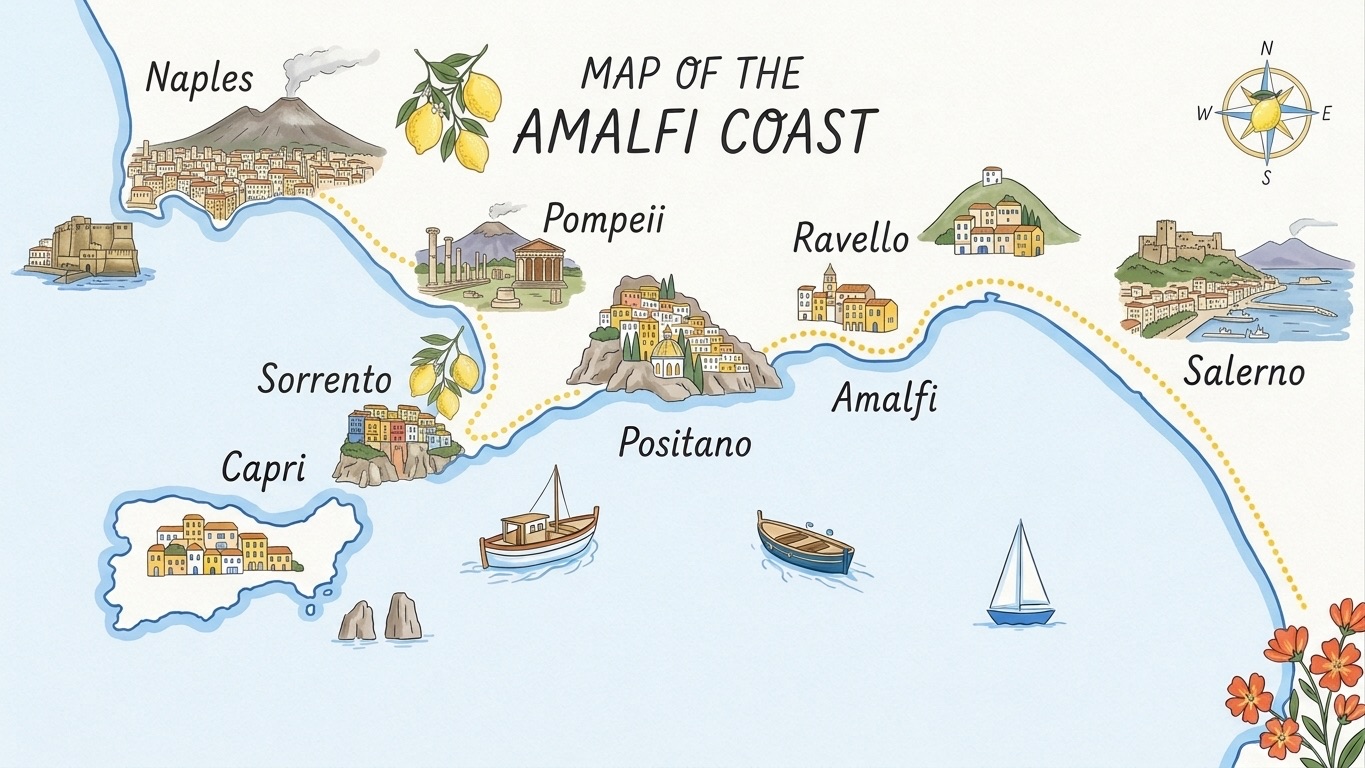
The Amalfi Coast (Costiera Amalfitana) is in Campania, southern Italy, in the Province of Salerno. It follows the southern side of the Sorrentine Peninsula, overlooking the Gulf of Salerno. The coast stretches from Positano in the west to Vietri sul Mare in the east, south-east of Naples.
The coast at a glance
How far is the Amalfi Coast?
Approximate road distances to Amalfi town. Distances to Positano, Ravello and other towns will differ.
Close to the coast. Not on it.
Four places you’ll often see on the same itinerary, but they’re not part of the 13 Amalfi Coast towns.
On the peninsula’s northern side, facing the Bay of Naples. A popular base for exploring the western coast.
An island in the Bay of Naples, reachable from the coast by seasonal boat services.
North-west of the coast. An important international airport and high-speed rail gateway.
Just beyond the eastern end. Useful for trains, buses and seasonal ferries to coastal towns.
Find your kind of coast
Best Amalfi Coast towns: where should you stay?
Choosing where to stay on the Amalfi Coast can shape your whole trip. Some towns are best for beaches, others for views, food or easier transport. Here are six popular bases, with the trade-offs worth knowing before you book.
Positano
Colourful cliffside houses, boutique hotels and Spiaggia Grande. The classic Amalfi Coast experience.
Amalfi
Historic centre, famous cathedral and excellent ferry and bus connections. A practical base for day trips.
Ravello
Elegant gardens, panoramic terraces and quiet evenings above the sea. Best for a slower, scenic stay.
Praiano
Sea-view terraces, quieter hotels and beautiful sunsets. A calmer alternative to Positano.
Maiori
A long beach, wide promenade and relatively flat centre. Excellent for easy beach holidays.
Minori
Excellent pastries, traditional restaurants and a compact seafront. A relaxed small-town base.
And 7 more towns worth knowing
Beyond the famous six, you’ll find fishing villages, mountain hamlets, quiet coves and some of the coast’s most distinctive local traditions.
Tiny seaside village beside Amalfi.
Dramatic fjord beach and hillside stays.
Sea-view hotels and hidden coves.
Historic hamlets and mountain trails.
Vineyards and rural mountain villages.
Fishing village famous for anchovies.
Colourful ceramics near Salerno.
The prettiest town isn’t always the best place to stay. Compare all 13 Amalfi Coast towns by beach access, atmosphere, transport connections, walkability and hotel location — so you know what you’re booking before you arrive.
Compare all 13 Amalfi Coast townsSix experiences worth your time
Best things to do on the Amalfi Coast.
From boat trips to mountain trails, these are six of the best Amalfi Coast experiences to build your trip around. Pick your favourites and leave some room for the unexpected.
Explore the coast by boat
See Positano, Amalfi and the dramatic cliffs from the water. Even a regular ferry offers unforgettable coastal views.
Tip: Ferry services are seasonal and weather-dependent.
Walk the Path of the Gods
Hike the famous Sentiero degli Dei from Bomerano towards Nocelle, with panoramic views over Positano and the coastline.
Tip: Allow around 3–4 hours for the classic route, plus onward travel.
Discover Ravello’s gardens
Visit Villa Rufolo and Villa Cimbrone for beautiful gardens and some of the Amalfi Coast’s most famous viewpoints.
Tip: Ravello is above Amalfi and has no ferry port.
Visit Fiordo di Furore
Discover the tiny pebble beach beneath a spectacular bridge, surrounded by steep cliffs and turquoise water.
Tip: Very limited parking; check beach access before visiting.
Explore historic Amalfi
Visit the Cathedral of Sant’Andrea, explore the old streets and discover Amalfi’s paper-making heritage.
Tip: Explore beyond the main square for quieter streets.
Find your perfect beach
Try Maiori for a long beach, Fornillo near Positano, or Duoglio for clear water below Amalfi’s cliffs.
Tip: Some beaches require steep steps or boat access.
The practical part of your trip
How to get to & around the Amalfi Coast.
Ferry, bus, train or rental car? The easiest way to travel depends on where you’re starting and where you’re staying. Here’s how to reach the Amalfi Coast and move between its towns without turning your holiday into a transport puzzle.
Getting to the Amalfi Coast
From Naples
Naples Airport (NAP) is the main international gateway. Continue by transfer, or take the train towards Salerno and a seasonal ferry to the coast.
From Salerno
An easy gateway to Amalfi, Maiori, Minori and Positano. Walk from the railway station to the seasonal ferry port, or take a SITA bus.
From Sorrento
Convenient for Positano and the western Amalfi Coast. Continue by seasonal ferry, SITA bus or private transfer.
Is there a train to the Amalfi Coast? Not directly to Amalfi or Positano. Use Salerno or Sorrento as your rail connection, then continue by sea or road. Flying in? Compare the best Amalfi Coast airports .
Getting around: which transport is best?
No single option works everywhere. Mix them depending on your plans.
| Transport | Best for | Keep in mind |
|---|---|---|
| Ferry | Positano, Amalfi, Minori, Maiori and other waterfront stops. Beautiful views and no coastal road traffic. | Seasonal departures and possible cancellations in rough weather. Ferry guide |
| SITA bus | Ravello, Praiano, Agerola and places without ferry ports. Usually the economical choice. | Crowded buses and road delays are common during busy periods. |
| Taxi / transfer | Airport arrivals, luggage, hillside hotels and late or awkward connections. | Convenient but potentially expensive. Check taxi fares |
| Rental car | Inland villages, rural stays and wider road trips outside the main coastal transport network. | Traffic, expensive parking and seasonal driving restrictions can outweigh the convenience. |
Timing is everything
Best time to visit the Amalfi Coast.
Wondering when to visit the Amalfi Coast? The right month depends on what matters most: warm seas, sunny days, fewer crowds or comfortable hiking weather.
June: Long, sunny days, relatively little rain and sea temperatures warm enough for swimming. Our best all-round choice.
September: Warm water after summer, softer heat and more comfortable sightseeing. Still popular, but generally less intense than August.
Amalfi Coast weather, month by month
A quick guide to choosing your dates
General seasonal guidance, not a forecast. Weather and ferry availability vary from year to year.
June – September
The most reliable months for enjoyable sea temperatures and beach days.
April, May & October
More comfortable weather for long walks, including the Path of the Gods.
May & October
Generally quieter than midsummer. October has a greater chance of rain.
November – March
Peaceful villages and local life, but fewer ferries and seasonal businesses.
Three days. One very good trip.
A 3-day Amalfi Coast itinerary that actually makes sense.
Three days is enough for a brilliant introduction to the coast, provided you’re not trying to visit all 13 towns. This 3-day Amalfi Coast itinerary without a car mixes famous sights with smaller villages, beaches and time to enjoy them.
Amalfi, Atrani & Ravello
Start with the historic heart of the coast, wander into its smallest seaside neighbour, then head uphill for the views.
-
Morning
Amalfi old town
Visit the Cathedral of Sant’Andrea, explore the narrow streets and stop for coffee.
-
Late morning / lunch
Atrani
Walk over to the little piazza and beach. Stay for a relaxed lunch.
-
Afternoon
Ravello
Take a bus or taxi uphill and visit Villa Rufolo or Villa Cimbrone.
Travel tip: Atrani is roughly a 10-minute walk from Amalfi. Check the return bus schedule from Ravello.
How to reach RavelloPositano & a beach afternoon
Today is about the famous views, colourful streets and enjoying Positano without rushing through it.
-
Morning
Ferry to Positano
Arrive from the sea for the classic view of pastel buildings above the beach.
-
Midday
Explore Positano
Wander the lanes, browse local shops and take your time over lunch.
-
Afternoon
Fornillo Beach
Walk from the main beach to Fornillo for a swim before returning to Amalfi.
Travel tip: Book your return ferry before planning beach time. Use the bus if ferries aren’t operating.
Check the ferry guideMinori, lemon groves & Maiori
Finish with good food, lemon terraces and an easygoing beach afternoon on the eastern side of the coast.
-
Early morning
Breakfast in Minori
Start with coffee and a pastry in this compact seaside town.
-
Late morning
Path of the Lemons
Walk the Sentiero dei Limoni towards Maiori through old terraces and hillside views.
-
Afternoon
Maiori Beach
Reward yourself with a swim, a leisurely lunch and time on the long beachfront.
Travel tip: The lemon trail has plenty of steps. Prefer an easier day? Take the bus or ferry instead.
Explore the coast without a carYour trip, minus the guesswork
15 Amalfi Coast questions to answer before you go.
Transport, hotels, beaches, weather and the little details that make a big difference. Here are practical answers to the questions travellers ask most often.
Getting there & around
The coast is beautiful. Getting between towns can take more planning than expected.
How do you get to the Amalfi Coast from Naples Airport?
The simplest option is a private transfer, particularly with luggage. For a lower-cost journey, travel from the airport to Napoli Centrale, take a train to Salerno, then continue by seasonal ferry or bus. For Positano, a route through Sorrento may also suit your plans. Compare arrival options .
Is there a train to Positano or Amalfi?
No. Neither Positano nor Amalfi has a railway station. Salerno is a useful train gateway for the eastern coast, while Sorrento works well for Positano. From either place, continue by bus, taxi or a seasonal ferry. See our Amalfi Coast transport guide .
Do Amalfi Coast ferries run all year?
Most coastal ferry routes are seasonal, with the widest choice from spring to autumn. Some services elsewhere in the region operate year-round, but don’t assume your Amalfi or Positano route does. Rough seas can also cancel sailings. Check the exact route and date in our ferry guide .
Can you explore the Amalfi Coast without a car?
Yes, and for many visitors it’s easier. Ferries connect major seaside towns during the operating season, while SITA buses reach places such as Ravello and Praiano. Driving brings narrow roads, traffic and expensive parking. A car is more useful for rural or poorly connected stays. Read our car-free travel guide .
How much do taxis cost on the Amalfi Coast?
Taxi prices depend on your starting point. As an example, Amalfi’s published 2026 fare to Positano is €90 for up to four people. The reverse journey can cost more, so don’t assume return fares are identical. Confirm the applicable tariff before travelling. See Amalfi Coast taxi prices .
Planning & accommodation
Choose the right base, the right amount of time and a budget that makes sense.
How many days do you need on the Amalfi Coast?
Three full days is a good introduction to Amalfi, Positano, Ravello and a quieter village. Five days or more gives you room for beaches, walking and slower meals without spending every afternoon changing buses. See the 3-day Amalfi Coast itinerary above for a practical starting route.
Is Positano or Amalfi better to stay in?
Choose Positano for romantic scenery and boutique hotels; choose Amalfi for a more practical transport base with easy access to Ravello and nearby towns. Positano usually means more stairs and higher accommodation costs. Compare both in our where-to-stay guide .
How expensive is an Amalfi Coast holiday?
It can be expensive, particularly in Positano during July and August. To keep costs down, compare accommodation in Maiori, Minori or Salerno, travel outside the busiest summer weeks and use public transport where practical. Hotel location matters as much as price: a cheap room far uphill may mean frequent taxis.
Can you visit the Amalfi Coast on a day trip from Naples?
Yes, but keep your plans realistic. Amalfi or Positano can make a memorable day trip, but visiting several distant towns in one day leaves little time to enjoy them. Choose one main destination, travel early and allow for road traffic or ferry changes. Check the transport options before deciding.
Which Amalfi Coast town is best for families?
Maiori is a strong family choice thanks to its long beach, promenade and relatively flat centre. Minori is another practical option. Positano is spectacular, but its many steps can be challenging with young children or a stroller. Compare all 13 towns in our accommodation guide .
Weather, beaches & experiences
The season, the sea and a few things worth checking before packing.
Is the Amalfi Coast worth visiting in October?
Yes, especially for sightseeing and a quieter atmosphere. October can bring pleasantly warm afternoons and occasional swimming days, but rain becomes more likely and ferry services begin reducing. Keep your schedule flexible rather than planning every day around the sea. See our October weather advice .
Can you swim on the Amalfi Coast in May?
Yes, if you don’t mind cooler water. The sea typically averages around 19°C in May, so short dips are pleasant for some swimmers but chilly for others. June through September generally offers more comfortable swimming temperatures. Check our monthly sea temperature guide .
Are there free beaches on the Amalfi Coast?
Yes. Look for areas marked spiaggia libera. Amalfi’s Marina Grande and nearby Atrani have public beach sections where you can bring your own towel. Other areas are operated by beach clubs charging for loungers and umbrellas. See our Amalfi beach guide .
Do you need to book Amalfi Coast beach clubs in advance?
Booking ahead is sensible in July and August, particularly for popular beach clubs and front-row loungers. Smaller beaches have limited space, while quieter weekdays may offer more flexibility. Check whether your booking includes an umbrella, loungers and any boat transfer before paying.
What should you avoid doing on the Amalfi Coast?
Don’t cram too many towns into one day or underestimate the stairs. Avoid tight ferry-to-flight connections, assuming parking will be easy and booking accommodation without checking its access. Save your important stops beforehand: our free Amalfi Coast map helps keep beaches, viewpoints and places to visit organised in one place.
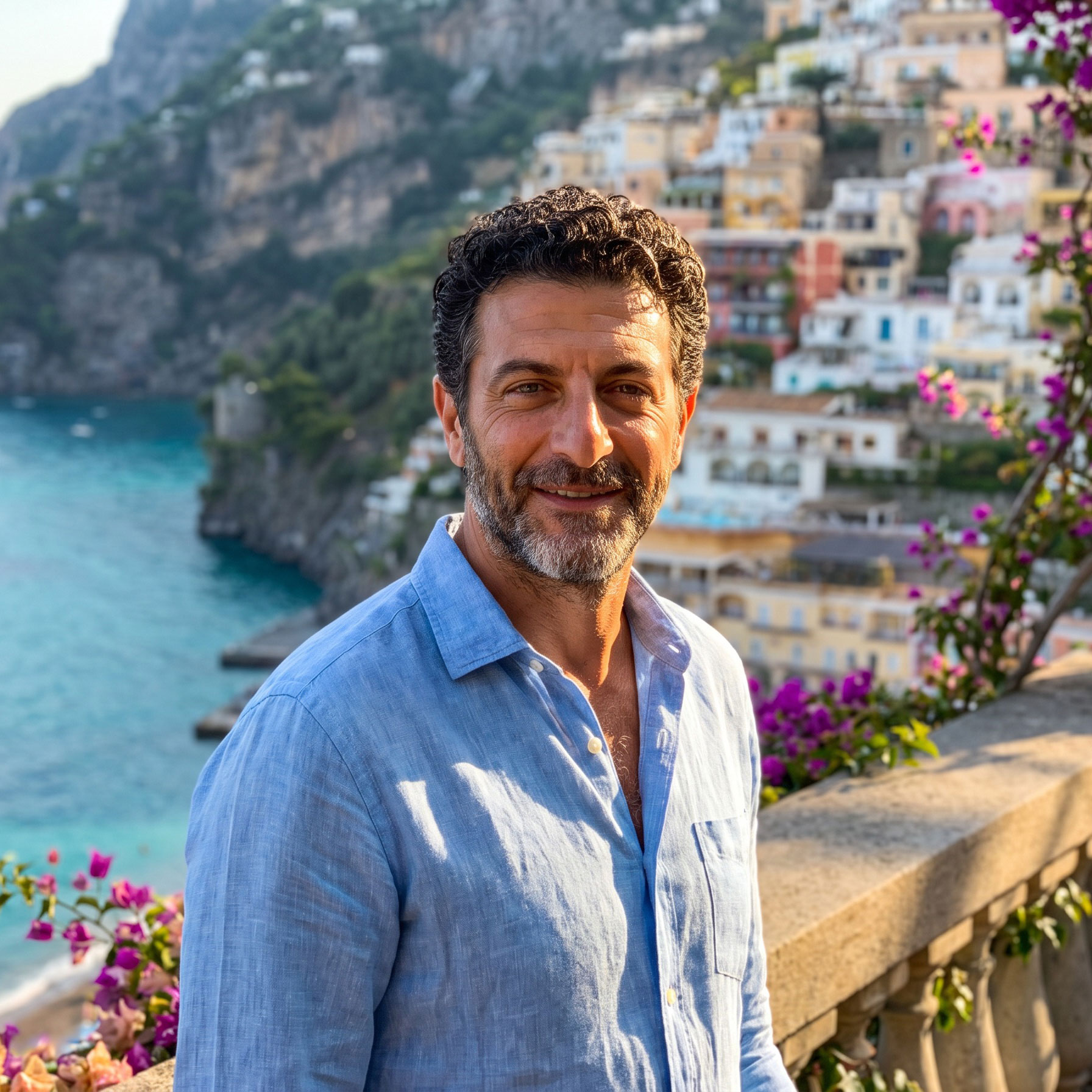
The person behind AmalfiMap
Ciao, I’m Marco.
I grew up on the Amalfi Coast. Now I help travellers discover the places I know and love.
I created AmalfiMap to share the kind of advice I’d give a friend visiting for the first time: where to stay, which beaches are worth the trip, and how to get around without the headaches.
Because a beautiful view is even better when you know which ferry to catch home. And where to stop for a good lunch along the way.